
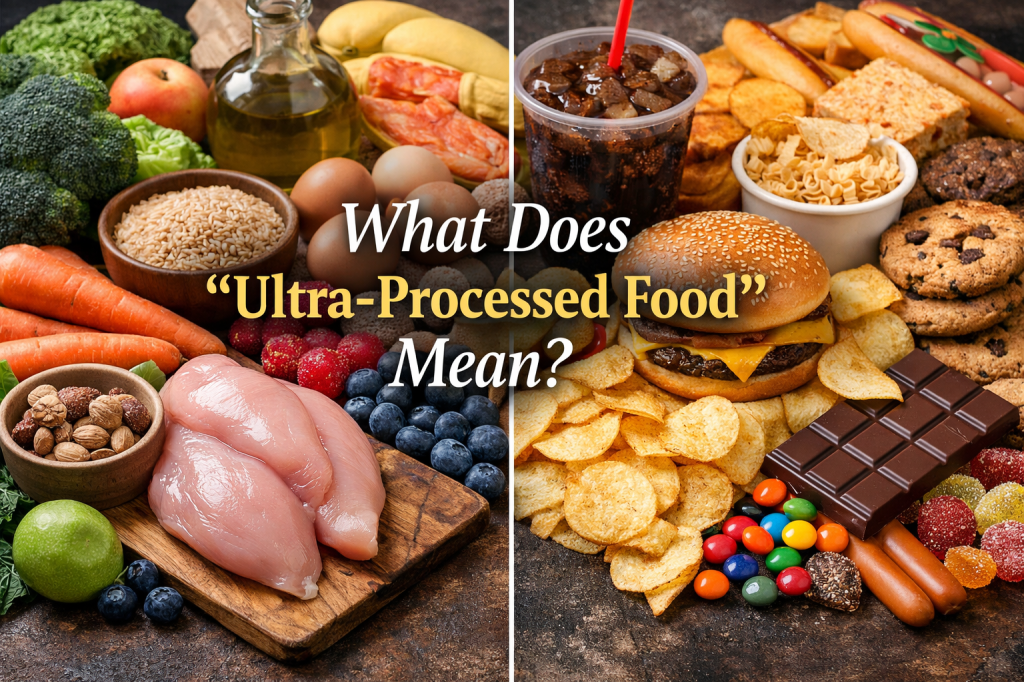
What Does “Ultra-Processed” Mean?
Over the past couple of years, I’ve noticed the term “ultra-processed food” appearing more and more in articles, documentaries, social media, and discussions about modern diets. At first, I wasn’t entirely sure what it meant, or how it differed from the regular processed foods we see in supermarkets every day.
The more I read about it, the more I realized that the concept is not just about sugar, fat, or calories. It is also about how food is produced, what ingredients are used, and how far it has moved from its original form.
In this post, I want to start exploring what ultra-processed food actually means and how it differs from other types of food processing. I’m still learning about this topic myself, and my goal is simply to become more aware of what ultra-processed foods are and how they appear in everyday diets. Along the way, I’d love to bring you with me on that journey—sharing what I learn as I try to understand the topic a little better.
The NOVA Food Classification System
If you have recently come across the term ultra-processed food, you may also have heard about something called the NOVA food classification system. But what exactly is it?
The NOVA system is a way of grouping foods based on how much they have been processed, rather than just looking at nutrients like fat, sugar, or calories. It was developed by researchers at the University of São Paulo in Brazil and is now widely used in nutrition research around the world.
Instead of focusing only on what nutrients a food contains, the NOVA system looks at how foods are made and how they change during processing.
To keep things simple, the following is just a short overview of the four food groups used in the NOVA system.
The Four NOVA Food Groups
- Unprocessed or Minimally Processed Foods
These foods are very close to their natural state. They may be washed, frozen, dried, or cut, but they have not been significantly altered.
Examples include:
- fresh fruits and vegetables
- rice and grains
- eggs
- milk
- fresh meat and fish
- nuts and seeds
These foods form the foundation of most traditional diets.
2. Processed Culinary Ingredients
These ingredients are usually extracted from natural foods and used in cooking to prepare meals.
Examples include:
- oils
- butter
- sugar
- salt
They are not typically eaten on their own but are used to cook and flavor other foods.
3. Processed Foods
Processed foods are made by combining natural foods with ingredients like salt, oil, or sugar.
These foods usually have a small number of ingredients and are often produced using traditional preservation methods.
Examples include:
- canned vegetables
- cheese
- freshly baked bread
- smoked or salted fish
These foods can still be part of a balanced diet.
4. Ultra-Processed Foods
Ultra-processed foods are industrial formulations made mostly from substances extracted from foods or created in laboratories.
They often contain many ingredients, including additives that improve taste, texture, or shelf life.
Common examples include:
- soft drinks
- packaged snacks
- instant noodles
- candy and sweets
- fast food products
- many breakfast cereals
These foods are typically designed to be convenient, highly palatable, and long-lasting.
Examples of Ultra-Processed Foods
Ultra-processed foods can be found in many supermarkets and convenience stores. They are often packaged, ready to eat, and designed to be convenient and long-lasting.
Some common examples include:
- soft drinks and sodas
- packaged snacks such as chips and crackers
- instant noodles
- candy and sweets
- many breakfast cereals
- fast food items
- packaged desserts and pastries
- processed meat products like hot dogs and chicken nuggets
These foods are typically made using multiple ingredients and additives that help improve flavor, texture, appearance, or shelf life. While they can be convenient and widely available, they are also one of the reasons why the topic of ultra-processed food has received growing attention in recent years.
However, some foods that many people consider “normal” everyday foods can also fall into the ultra-processed category.
Examples can include:
- flavored yogurt
- breakfast cereals
- packaged sandwich bread
- protein bars
- plant-based meat alternatives
- some ready-made sauces and dressings
This doesn’t necessarily mean these foods should always be avoided. The NOVA system simply classifies them based on how they are produced and what ingredients they contain, rather than judging whether they are “good” or “bad.”
Why Are People Talking About Ultra-Processed Food?
In recent years, ultra-processed foods have become a growing topic of discussion among researchers, health professionals, and the public. One reason is that these types of foods now make up a large part of many modern diets, especially in highly industrialized countries.
At the same time, more research has started looking at how different levels of food processing may influence eating habits and overall health. As a result, the concept of ultra-processed food has gained more attention in documentaries, books, and discussions about nutrition.
For many people, the topic also raises questions about how modern food systems work and how everyday food choices have changed over time.
Final Thoughts
Learning about ultra-processed food is not about labeling foods as simply “good” or “bad.” Instead, it is about becoming more aware of how the foods we eat are produced and what they contain.
For me, this topic is still something I am exploring and trying to understand better. The goal is not to completely avoid certain foods, but rather to learn more about how different foods fit into everyday diets.
As I continue learning about ultra-processed foods, I hope to share what I discover along the way. If you are curious about the topic as well, you are very welcome to follow along as I keep exploring and learning more.
If there’s something specific about ultra-processed foods you’d like me to dive deeper into, feel free to leave a comment :)
Sources:
- Monteiro CA et al. Ultra-processed foods: what they are and how to identify them. Public Health Nutrition.
- Harvard T.H. Chan School of Public Health
Processed and Ultra-Processed Foods. - Massachusetts General Hospital – Nutrition and Food Processing Resources
 Skeinstudio
Leave a comment